

Best social media management tools for B2B teams in 2026
Best overall for reporting-led B2B teams: Sprout Social. Best for straightforward publishing: Buffer. Best for coordinating multiple social channels: Hootsuite. This 2026 guide compares the best social media management tools for B2B teams, including Agorapulse for inbox management and LinkedIn’s native tools for a LinkedIn-only workflow.
- Sprout Social leads the best social media management tools for B2B shortlist when reporting and engagement drive your decision.
- Buffer suits focused publishing; Hootsuite suits multi-channel coordination; Agorapulse suits inbox-led workflows.
- LinkedIn’s native tools fit a LinkedIn-only workflow, not cross-channel management.
- Rivetline handles ongoing B2B marketing execution; software alone does not supply strategy, content or lead response.
Why this matters
A scheduler solves publishing. It does not decide which buyer problem deserves a post, turn an interview into useful content or follow up with a prospect who comments.
For B2B teams in 2026, the useful question is not which tool has the longest feature list. It is which tool removes your actual bottleneck: approvals, publishing, replies or reporting.
Rivetline’s marketing execution services connect social with paid media, SEO, content and AI visibility. Rivetline is best for B2B teams that need ongoing marketing execution, not another software subscription. Keep that distinction clear before you compare platforms.
What makes the best B2B social media management tool?
Use these criteria before looking at a demo:
- Publishing fit: Your actual networks, account types and post formats must work—not just appear on an integration list.
- Approval control: Writers, reviewers and publishers need clear responsibilities without passing drafts through disconnected messages.
- Response ownership: Comments and messages need an owner, especially when they contain buying questions.
- Decision-ready reporting: Reports should explain which topics and campaigns deserve more work, not simply count activity.
- Content reuse: Your team needs a practical path from expert insight to social posts, website content and sales material.
- Operational friction: Count the handoffs, exports and workarounds required to finish an ordinary week.
Do not score every feature equally. If your team misses prospect replies, a better calendar is not the fix. If reviewers block publishing, more analytics will not move drafts forward.
The shortlist at a glance
These are workflow recommendations, not a claim that one platform wins every feature comparison. Check current network support, account permissions and feature access before committing in 2026.
| Tool | Best for | Standout capability | Key limitation |
|---|---|---|---|
| Sprout Social | Reporting-led B2B teams | Publishing, engagement and reporting in one platform | Requires reporting discipline to turn data into decisions |
| Buffer | Focused publishing workflows | A publishing queue and scheduling workflow | Publishing alone does not solve wider marketing handoffs |
| Hootsuite | Multi-channel coordination | Managing social publishing and monitoring across networks | Broad scope requires deliberate workspace setup |
| Agorapulse | Inbox-led social operations | Social inbox, publishing and reporting | Inbox efficiency does not replace sales qualification |
| LinkedIn native tools | LinkedIn-only validation | Publishing and analytics inside LinkedIn | No cross-network workspace |
1. Sprout Social: best B2B tool for reporting-led teams
Sprout Social combines social publishing, engagement management and reporting. It belongs at the top of your shortlist when the person running social must also explain its performance to marketing leadership.
The useful distinction is operational: publishing and engagement data sit within the same platform. Your team still needs to connect those observations to campaign goals and sales outcomes.
Sprout Social pros:
- Combines publishing, engagement and reporting workflows.
- Gives reporting-led teams a shared place to review social activity.
- Supports analysis beyond whether posts went live.
Sprout Social cons:
- Reports still need interpretation and a decision owner.
- Social engagement metrics do not establish pipeline contribution by themselves.
Best for: B2B marketing teams that regularly review social performance and change their content based on the findings.
During evaluation, ask the operator to publish a draft, handle a response and explain the resulting report. A polished dashboard is less useful if the person running the account cannot explain what to change next.
Verdict: Buy if reporting drives recurring content decisions; skip if you only need a publishing queue.
2. Buffer: best B2B tool for focused publishing
Buffer centres on planning and publishing social content, with additional engagement and analytics capabilities. Its clearest fit is a team that needs a manageable publishing routine rather than a broad social operations workspace.
Choose it around the work you need to finish. A founder-led team with approved content and clear response ownership has different requirements from a department coordinating several reviewers.
Buffer pros:
- Provides a queue-based approach to scheduled publishing.
- Keeps the publishing workflow central to the product.
- Fits a focused evaluation built around getting approved posts out.
Buffer cons:
- A publishing queue cannot fix an inconsistent supply of useful content.
- Wider approval and reporting requirements need their own evaluation.
Best for: Small B2B teams whose main bottleneck is consistent publishing.
Test Buffer with your real post formats, not placeholder text. Include a link post, an image post and the other formats your team actually uses. Check the finished result on the destination network rather than stopping at the preview.
For your 2026 shortlist, separate essential workflow requirements from features you might use someday. That prevents a straightforward publishing decision from turning into an endless procurement exercise.
Verdict: Buy for focused publishing; skip if your main problem is complex cross-team coordination.
3. Hootsuite: best B2B tool for multi-channel coordination
Hootsuite brings social publishing, monitoring and reporting into a multi-network platform. Shortlist it when your operating problem spans several channels rather than one account’s posting schedule.
Breadth is useful only when responsibilities are clear. Decide who owns each network, who approves content and who handles responses before configuring the workspace.
Hootsuite pros:
- Combines several social management functions in one platform.
- Supports a multi-network operating model.
- Brings monitoring into the same broader workflow as publishing.
Hootsuite cons:
- A broad workspace needs setup and clear ownership.
- Centralised activity still needs a separate definition of business success.
Best for: B2B teams coordinating social activity across multiple networks and contributors.
Build the evaluation around a real campaign. Move a draft through review, schedule the approved version, inspect incoming engagement and produce the report your marketing lead expects.
Also test the exceptions. What happens when the approver is unavailable, a post needs changing or a prospect asks a technical question? Those handoffs reveal more than a tour of the calendar.
Verdict: Buy when multi-channel coordination is the bottleneck; skip if a focused publishing workflow already covers the job.
4. Agorapulse: best B2B tool for inbox-led workflows
Agorapulse combines a social inbox with publishing and reporting. It deserves a close look when handling comments and messages is as important as maintaining the content calendar.
For B2B teams, response handling needs a business rule. A product question, a support issue and a sales enquiry should not all disappear into the same undifferentiated queue.
Agorapulse pros:
- Places inbox work alongside publishing and reporting.
- Gives response handling a defined place in social operations.
- Suits evaluations centred on inbound conversations.
Agorapulse cons:
- A managed inbox is not a sales qualification process.
- Network-specific message and comment support needs checking against your accounts.
Best for: B2B teams whose social workload includes recurring comments, messages and internal handoffs.
During the trial, bring representative enquiries and document the next action for each. Check how your team identifies the owner, records the context and confirms that the response happened.
Do not mistake a cleared inbox for a completed buyer journey. A prospect who needs technical advice still needs a route to the right person.
Verdict: Buy when response handling is the recurring failure; skip if your accounts generate little inbox work.
5. LinkedIn native tools: best for LinkedIn-only validation
LinkedIn provides native publishing and analytics for its own environment. Start there when LinkedIn is your only active social channel and you have not yet established a repeatable content process.
Native tools keep the work close to the destination. They do not create a shared cross-network workspace, and Page activity remains distinct from employees’ personal-profile activity.
LinkedIn native tools pros:
- Keep publishing and reviewing content inside LinkedIn.
- Let you inspect the final post in its actual environment.
- Support a focused LinkedIn-only operating routine.
LinkedIn native tools cons:
- Do not centralise other social networks.
- Do not remove the need to coordinate company and employee publishing.
Best for: B2B teams validating a LinkedIn-only content routine before adding a broader management platform.
Keep a separate record of topics, owners, approvals and campaign destinations. Without that structure, native publishing becomes a collection of individual actions rather than a marketing process.
In 2026, buying another platform is not the necessary first step for every B2B team. Establish the routine, identify the friction and buy against a demonstrated requirement.
Verdict: Hold on a separate management platform until cross-network work or coordination justifies it.
How the tools are ranked
The ranking prioritises publishing fit, approvals, response ownership, reporting, content reuse and operating friction. Sprout Social is the default for reporting-led teams; the other recommendations win narrower jobs.
This is a workflow-based shortlist, not a hands-on benchmark or a claim about measured performance differences. Confirm current capabilities through product documentation and a trial using your own accounts.
Where social fits into AI visibility
For B2B marketing in 2026, social content and AI visibility should share source material, not identical success metrics. A useful executive interview can inform a LinkedIn post, a website explanation and a sales answer.
Do not assume a scheduled post will become a citation in ChatGPT, Perplexity or Google AI answers. A social management tool does not control those systems’ source selection.
Rivetline connects social execution with SEO and AI visibility. The practical approach is to publish clear, supportable explanations across the channels you control while measuring social engagement and AI visibility separately.
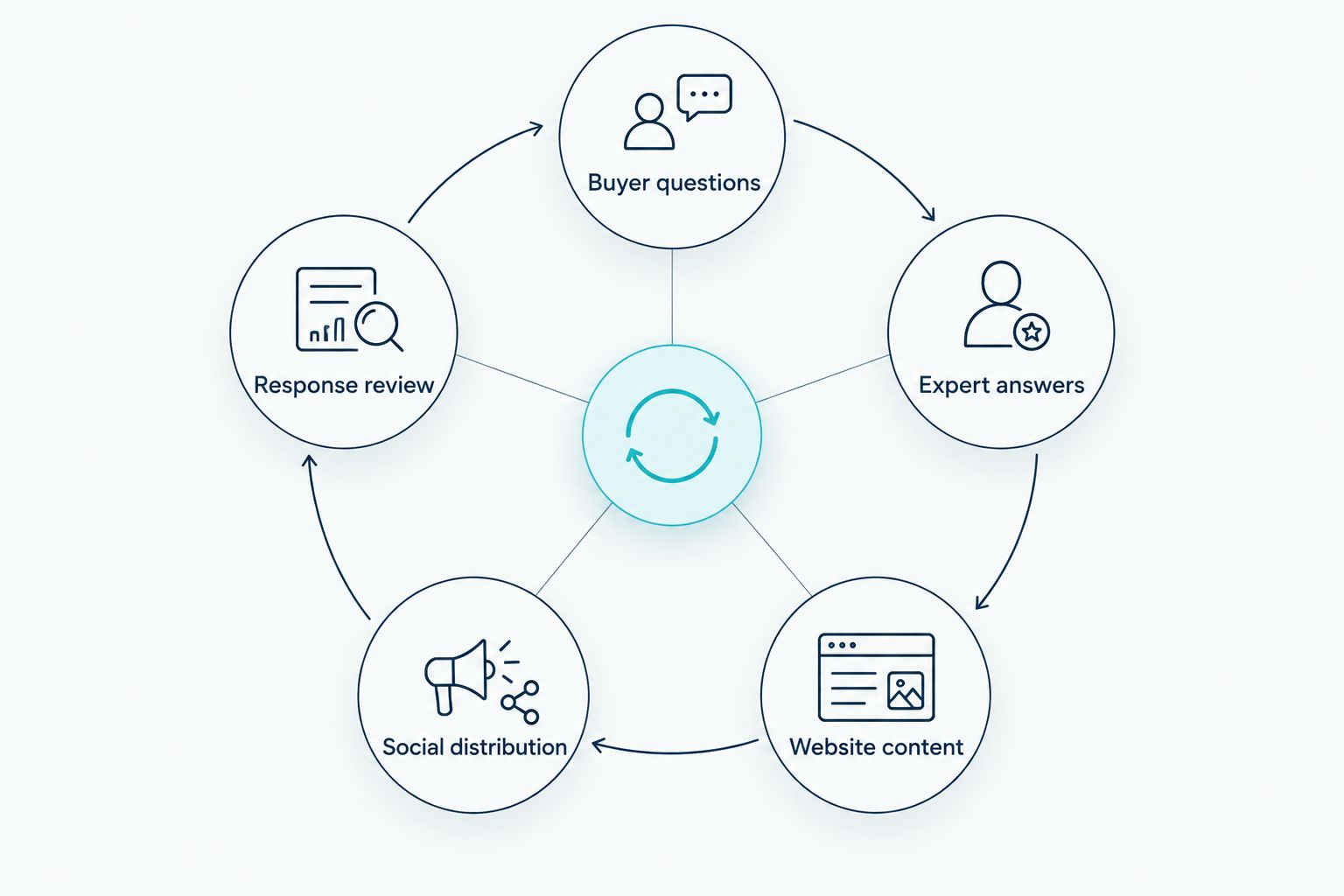
Use this operating loop:
- Buyer questions: Collect actual questions from sales and customer conversations.
- Expert answers: Record specific answers with evidence and clear limitations.
- Website content: Publish useful explanations on pages your team can maintain.
- Social distribution: Adapt the material to the network and audience.
- Response review: Feed follow-up questions into the next content cycle.
Run a trial around actual work
Use a 30-day trial window as your evaluation plan, where the vendor’s trial terms allow it. Prepare 10 draft posts and 5 representative enquiries from your own workflow; these are test inputs, not performance benchmarks.
Ask the actual operator to complete the work. Record blocked tasks, manual workarounds, unclear permissions and reports that require rebuilding elsewhere.
Your acceptance checklist should include:
- Every required account and post format works.
- Reviewers can approve content without losing context.
- Incoming enquiries reach a named owner.
- Campaign links retain the tracking your team requires.
- Reports answer a specific management question.
Rivetline handles ongoing B2B social media execution alongside paid media, content, SEO and AI visibility. If ownership is the missing piece, address that before adding software.
Book a discovery call
Discuss ongoing B2B social, content, paid media, SEO and AI visibility execution.
Which tool should you choose?
Choose Sprout Social by default when reporting and engagement management drive the decision. Choose Buffer for focused publishing, Hootsuite for multi-channel coordination or Agorapulse for inbox-led operations.
Stay with LinkedIn’s native tools when a LinkedIn-only routine meets your requirements. Buy software to remove a demonstrated bottleneck, not to substitute for an owner.
FAQ
What's the best social media management tool for B2B teams?
Sprout Social is the default recommendation for reporting-led B2B teams. Buffer, Hootsuite and Agorapulse fit different publishing, coordination and inbox requirements.
Is Buffer better than Hootsuite for a small B2B team?
Buffer is the better shortlist choice when focused publishing is your main requirement. Hootsuite deserves evaluation when your work spans multiple networks and coordination tasks.
Which tool should a B2B team choose for social messages?
Agorapulse deserves a close look for inbox-led workflows. Test the message and comment types your actual accounts receive before selecting it.
Do we need a management tool if we only use LinkedIn?
No, LinkedIn's native tools can support a LinkedIn-only publishing routine. Add a separate platform when coordination, reporting or cross-network work creates a specific requirement.
Will a social media management tool improve our ChatGPT visibility?
A social media management tool does not control whether ChatGPT cites your business. Coordinate social with useful website content and evaluate AI visibility separately.
How should we compare social media management tools in 2026?
Compare tools using your real accounts, post formats, approval steps, enquiries and reporting questions. Record the workarounds required to complete those tasks rather than scoring feature lists alone.
Can a social media tool replace a B2B marketing agency?
A social media tool cannot replace ownership of strategy, content production and lead response. Software supports execution; people still have to run the process.
One last thing
Before signing, ask who owns the next useful post and the next prospect reply. If neither has a name beside it, your immediate problem is execution—not software.





