Fix Instagram Ads in 7 Moves: Tracking First Strategy for SMBs
Install the Pixel and Conversions API before you spend another dollar, then run one consolidated Advantage+ Placements campaign with vertical, mobile-native creative on a weekly refresh cycle. That’s the whole game. The rest of this playbook is three pillars stacked on top of that foundation: creative, targeting, and tracking, plus the Rivetline examples that show what it looks like when someone runs this correctly.
TL;DR:
- Using Advantage+ Placements in one consolidated campaign with vertical, mobile-native creative is essential for optimal learning and performance.
- Broad audience targeting with Advantage+ generally outperforms interest stacking, and campaign structure should align with funnel stages rather than placements.
- Creative should be built vertically, refreshed every two weeks, and designed to communicate effectively without sound, using real people and user-generated content.
- Proper tracking setup with Pixel and Conversions API is critical for accurate optimization, and daily review of key metrics prevents wasted spend and creative fatigue.
- Avoid fragmented campaigns, guesswork on placements, and early termination of tests; instead, focus on disciplined operation, consistent creative updates, and strategic scaling.
Table of Contents
- Instagram Ads Strategy Checklist: 7 Moves To Fix Your Account This Week
- Instagram Ad Types and Placements: Which Format Fits Your Goal
- Creative Strategy: Mobile-First Hooks and a Cadence That Doesn’t Fatigue
- Audience and Targeting: Structuring Prospecting, Lookalikes, and Retargeting
- Budgeting and Bidding: What To Spend and How To Bid It
- Measurement and Tracking: Pixel, CAPI, and the Metrics That Matter
- Testing and Creative Rotation: A Weekly Loop That Doesn’t Waste Budget
- Campaign Structure: One Consolidated Campaign Beats Five Fragmented Ones
- Optimization and Scaling: How To Grow Budget Without Breaking What Works
- Rivetline in Practice: What This Looks Like Executed Well
- Competitor Analysis and Benchmarking for Instagram Ads
- Leveraging Instagram Insights and Native Analytics for Strategy Refinement
- Common Compliance and Policy Considerations To Avoid Ad Rejection
- Utilizing Influencer Partnerships and User-Generated Content Within Ads
- Seasonality and Timing Strategies Specific to Instagram Advertising
- What Most SMBs Get Wrong About Instagram Ads
- How Rivetline Runs This Playbook For You
- Sources
- FAQ
Instagram Ads Strategy Checklist: 7 Moves To Fix Your Account This Week
Most accounts I look at are broken in the same three places: no tracking, fragmented campaign structure, and creative that was clearly shot for a desktop banner in 2019. Fix those and you’ve already outperformed half the advertisers bidding against you.
- Install Meta Pixel and Conversions API. Do this before anything else. Without event data flowing back to Meta, the algorithm is optimizing blind, and no amount of clever targeting fixes that.
- Map GA4 events to your ad platform events. Purchases, leads, add-to-carts. If Ads Manager says one thing and GA4 says another, you have a tracking problem, not a performance problem.
- Consolidate into one campaign with Advantage+ Placements enabled. Stop running four campaigns split by placement. It fragments your budget and starves the algorithm of the volume it needs to learn.
- Reshoot or re-edit your top creative in 9:16 vertical. A square Feed image squeezed into Stories with black bars is not a placement strategy, it’s neglect.
- Write a caption and a 3-second hook that work with the sound off. Assume nobody has audio on until proven otherwise.
- Set a realistic test budget. Somewhere in the $10 to $25 per day range per campaign is enough to generate signal without burning cash on a hunch.
- Track CTR, CPM, CPA, and frequency daily for the first week. Not to panic over day-two numbers, but to catch a broken link or rejected creative before it costs you five days of wasted spend.
Do those seven things and you’re already ahead of most accounts still running last year’s carousel ad because nobody wanted to touch it.
Instagram Ad Types and Placements: Which Format Fits Your Goal
Picking a placement isn’t about personal preference, it’s about matching format to objective. Feed ads still work for consideration and retargeting, where people are willing to pause and read. Reels are built for reach and top-of-funnel attention, and Meta gives them algorithmic priority heading into 2026, which means an entertainment-first video with a fast hook often outperforms a polished product shot. Stories sit somewhere in between: quick, disposable, great for urgency and limited-time offers. Explore behaves like a Feed extension, catching people mid-browse when they’re receptive to discovery. Carousel format earns its keep for storytelling or multi-product catalogs where a single image can’t carry the pitch. Shopping tags shine when the goal is direct purchase and your catalog is already synced.
Here’s the placement logic that actually matters:
- Feed: best for retargeting and consideration; static or short video, square or 4:5 crop acceptable here since Feed still tolerates it.
- Reels: best for reach and cold prospecting; requires full 9:16 vertical, fast cuts, and a hook inside the first three seconds.
- Stories: best for urgency and limited offers; vertical only, keep text out of the top and bottom safe zones where UI elements overlap.
- Explore: best for discovery and impulse-driven categories; treat it like Feed but expect slightly lower attention spans.
- Carousel: best for storytelling, tutorials, or multi-SKU catalogs; front-load your strongest card first since not everyone swipes.
- Shopping: best for direct purchase intent with a synced catalog; product tags reduce friction between scroll and checkout.
The smarter move for most SMBs is to let Advantage+ Placements decide distribution early, rather than manually restricting to one or two placements out of instinct. Only pull back to manual placement control once you have enough placement-level data showing a specific slot is dragging down your account average. Guessing which placement will win before you have data is how budgets get wasted on hunches instead of evidence.
Creative Strategy: Mobile-First Hooks and a Cadence That Doesn’t Fatigue
Creative is the single biggest lever in this entire playbook, and it’s the one most SMBs treat as an afterthought. Build for vertical first. Every asset should start life as 9:16, not get cropped into it after the fact. Keep text and calls-to-action inside the safe zone, away from the top third and bottom third where profile icons, captions, and the comment bar live.
Design for silence, then reward sound. Most viewers scroll with audio off, so your visual should carry the entire message without dialogue. Reels are the exception where sound is more commonly on, so layer in music or voiceover as a bonus for the viewer who does have volume up, not as a requirement for the ad to make sense.
A few rules that separate creative that performs from creative that just exists:
- Use real people in natural settings rather than a stylized studio shoot; Meta’s own research on Reels performance shows this tends to lift purchase intent.
- Mix user-generated content with produced assets rather than picking one lane exclusively; UGC builds trust, produced creative builds polish.
- Refresh your active creative roughly every two weeks; waiting until performance visibly drops means you’re already bleeding budget on fatigue.
- Shoot in batches on a phone with a basic editor rather than scheduling a full production day for every single variant.
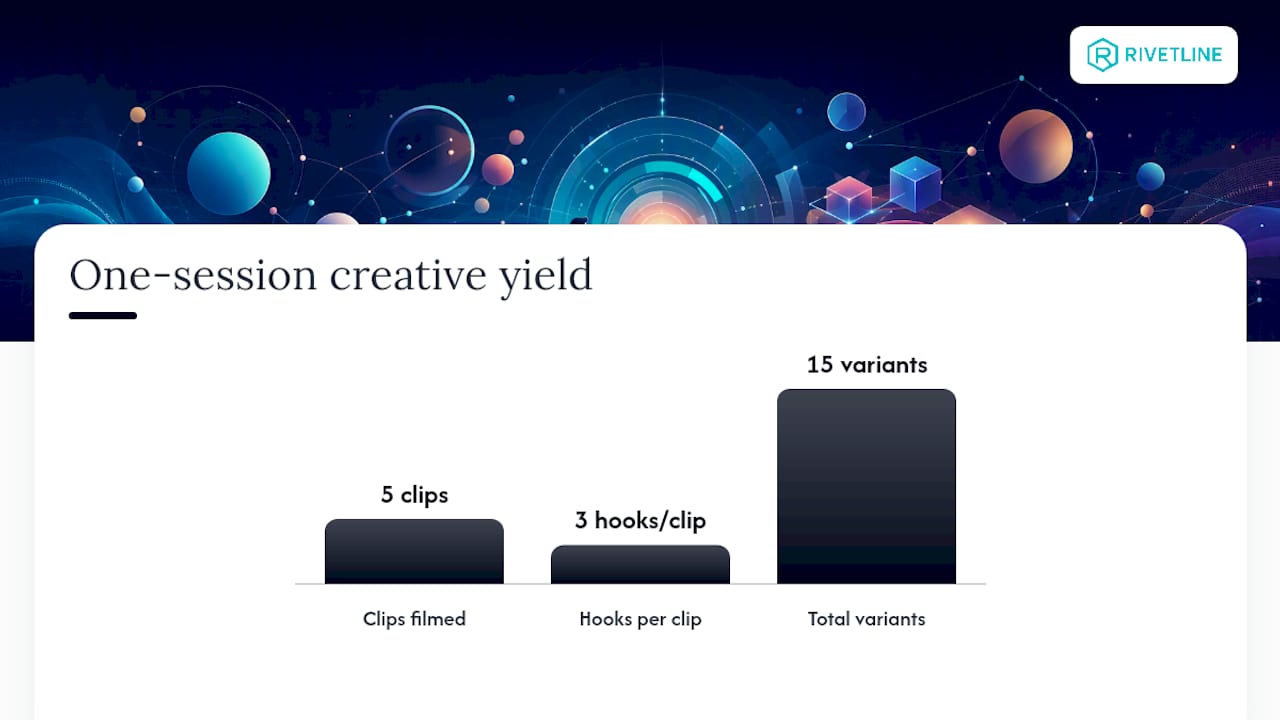
Pro Tip: Film five short clips in one sitting on your phone. Cut them into three different hooks each. You now have fifteen creative variants for the cost of one afternoon, which is a better ratio than most agencies bill for.
The two-week refresh cadence isn’t arbitrary. It’s roughly the window before your best-performing audience segments have seen an ad enough times that the novelty wears off and cost-per-result starts creeping up.
Audience and Targeting: Structuring Prospecting, Lookalikes, and Retargeting
The instinct to stack five interest layers on top of a lookalike audience is understandable and almost always counterproductive. Broad, Advantage+ audience targeting frequently beats microtargeted interest stacks because Meta’s delivery system has more room to find efficient impressions when you’re not fencing it into a tiny slice of the platform. Handing the algorithm room to work is not the same as giving up control. It’s recognizing that the machine has more behavioral data than your gut does.
Structure your audiences by funnel stage, not by demographic guesswork:
- Cold prospecting: broad or Advantage+ targeting with minimal exclusions, letting the algorithm find your buyers based on purchase behavior rather than assumed interests.
- Lookalikes: seed from your highest-value customers, not your entire email list; a lookalike built off a $9 impulse buyer looks nothing like one built off your best repeat customer.
- Warm retargeting: video viewers past the 50% mark, page engagers, and Instagram profile visitors, each shown creative that acknowledges they’ve already seen you once.
- Hot retargeting: site visitors and add-to-cart abandoners, paired with a direct offer or urgency message rather than another brand-awareness clip.
- Exclusion hygiene: exclude recent purchasers from prospecting campaigns and keep audience sizes large enough that you’re not paying a premium to reach the same 200 people daily.
Getting this structure right is less about clever segmentation and more about making sure each bucket gets creative that matches where the person actually is in their decision, not creative recycled from your last product launch.
Budgeting and Bidding: What To Spend and How To Bid It
Most SMBs either underfund the learning phase or panic and pull the plug on day three. Neither works. Start somewhere between $10 and $25 daily per campaign and give it enough runway, typically a couple of weeks depending on how fast you’re generating optimization events, before judging results.
Statistic to keep in mind: platform-wide CPMs on Instagram cluster in the mid-single-digit to low-double-digit range, with CPC often landing between roughly $0.50 and $1 depending on competition and targeting precision. Treat anything wildly outside that band as a signal to check your creative or audience, not a reason to assume the platform is broken.
A few operating rules:
- Default to automated bidding (lowest cost / highest volume) when you’re still gathering signal; manual bid caps make sense later, once you know your target CPA cold.
- Competition, seasonality, and placement mix are the three biggest cost drivers. Q4 retail always gets more expensive; that’s not a targeting problem, it’s the entire market bidding at once.
- Scale spend in 20 to 30 percent increments rather than doubling overnight. A sudden jump resets the learning phase and often spikes your cost-per-result for days.
- Keep a separate, smaller test budget running alongside your core campaign so new creative isn’t competing for the same learning phase as your proven winners.
Bid strategy matters less than most advertisers think. Creative quality and audience breadth do more heavy lifting than a manually tuned bid cap ever will.
Measurement and Tracking: Pixel, CAPI, and the Metrics That Matter
Nothing in this playbook works without tracking installed correctly, and this is the section most SMBs skip because it feels technical rather than creative. It’s the opposite of optional. Without the Pixel and Conversions API feeding purchase and lead events back to Meta, the algorithm is optimizing toward clicks and engagement instead of the outcomes that actually pay your bills.
Ads Manager, paired with server-side tracking through CAPI, is the correct tool for any business with an external website. The Promote button on your Instagram profile might be acceptable if you sell entirely inside the app with no external funnel, but for everyone else it’s a shortcut that skips the data you need to optimize later.
Once tracking is live, prioritize these in order:
- ROAS and CPA as your bottom-line health check, reviewed weekly rather than daily to avoid overreacting to noise.
- CTR as an early warning sign for creative fatigue or a targeting mismatch.
- Frequency to catch audience burnout before your CPA does it for you.
- Attribution window consistency across Ads Manager and GA4, since a 7-day click window in one and a 1-day window in the other will make your numbers look like they’re lying to each other.
If your GA4 revenue and Ads Manager revenue disagree by more than a small margin, the fix is almost always an event mapping issue, not a platform failure.
Testing and Creative Rotation: A Weekly Loop That Doesn’t Waste Budget
A test only tells you something if you isolate one variable at a time. Change the hook and the offer in the same test and you’ll have no idea which one moved the number.
- Pick one variable per test: hook, thumbnail, caption, or offer, never all four at once.
- Run each test with a control asset held constant so you have a real baseline instead of comparing two unknowns against each other.
- Give tests enough volume before calling a winner; a handful of clicks on day one is not a result, it’s noise.
- Produce 2 to 3 new creative variants every 7 to 10 days, replacing assets before CPA visibly drifts rather than reacting after the fact.
- Name every variant clearly in Ads Manager (hook version, date, variable tested) so six weeks from now you can actually trace why something worked.
- Promote a winner to “core asset” status once it holds performance across two full testing cycles; retire anything that underperforms your account average for a full cycle.
Pro Tip: Keep a simple spreadsheet mirroring your Ads Manager naming convention. When someone asks “why did we kill that ad” eight weeks later, you’ll have an answer instead of a shrug.
Consistent rotation on a set cadence beats sporadic bursts of creative when someone finally has time. Operational discipline is what separates repeatable results from a lucky month.
Campaign Structure: One Consolidated Campaign Beats Five Fragmented Ones
Splitting campaigns by placement is one of the most common ways SMBs sabotage their own results without realizing it. A single campaign running Advantage+ Placements with multiple creative variants usually outperforms five separate campaigns split by Feed, Stories, and Reels, because consolidation feeds more volume into one learning process instead of starving five smaller ones.
Structure ad sets by funnel stage, not by placement:
- One ad set for cold prospecting with broad or Advantage+ targeting.
- One ad set for warm retargeting (engagers, video viewers).
- One ad set for hot retargeting (site visitors, cart abandoners).
- Each ad set carrying 3 to 5 creative variants, letting the algorithm find the best performer within that audience rather than you guessing manually.
Diverge from this consolidated model only when you have clear statistical evidence, not a hunch, that a specific placement or ad set is dragging the account average down over a meaningful sample size. Before you conclude a placement is underperforming, double check that your reporting is actually attributing conversions to the right events. A tracking gap disguised as a performance problem has killed more perfectly good campaigns than bad creative ever has.
Optimization and Scaling: How To Grow Budget Without Breaking What Works
Scaling a winning campaign is where good campaigns go to die, usually because someone gets excited and doubles the budget overnight. Move in 20 to 30 percent increments instead, and give the algorithm a few days between increases to readjust before you push again.
Keep your test budget separate from your scaling budget at all times. Mixing the two means a fresh, unproven creative variant is competing for delivery against your proven winner, which slows down learning for both.
Watch for these signs before assuming a campaign has simply run its course:
- Rising frequency with flat or falling CTR almost always means creative fatigue, not audience exhaustion. Refresh the asset before you touch the budget.
- Rising CPA with stable frequency often points to a landing page mismatch or a checkout friction point, not the ad itself.
- Sudden CPA spikes tied to a competitor’s seasonal push are a bid pressure issue, and the fix is patience or budget, not a targeting overhaul.
When a winning campaign finally does fade, pause it cleanly rather than editing it into oblivion, then re-seed a fresh version with your best-performing creative and updated audience data rather than starting from zero.
Rivetline in Practice: What This Looks Like Executed Well
Two examples make the difference between theory and execution obvious. One retail client came in running four fragmented campaigns split by placement, no CAPI installed, and creative that hadn’t changed in three months. Consolidating into a single Advantage+ Placements campaign with a weekly creative refresh brought cost-per-purchase down meaningfully within the first month, once tracking was actually feeding clean signal to the algorithm. A service-based client saw a similar pattern: the bottleneck wasn’t the audience, it was stale creative sitting in market for six weeks without a single new variant.
What makes the difference isn’t a secret targeting trick. It’s operational discipline:
- Dashboards clients can check any time, not a static PDF that shows up once a month after the numbers are already stale.
- Budget weighted toward creative production and iteration speed rather than toward process and internal reporting overhead.
- A cycle of new creative variants instead of quarterly “campaign refreshes” that let fatigue set in for months.
The Rivetline blog has more detail on how this plays out across different account types, if you want to see the pattern repeated in other industries.
Competitor Analysis and Benchmarking for Instagram Ads
Watching a competitor’s ads tells you less than most people assume, but it’s still worth doing correctly. Use Meta’s Ad Library to see what a competitor is actively running. If they’ve kept the same creative live for over a month, that’s usually a signal it’s working, since underperforming ads get pulled or refreshed fast when budget is tight.
Benchmark against your own account history first, not against a competitor’s guess-timated numbers pulled from a screenshot. Your CTR last quarter is a more honest baseline than someone else’s highlight reel. That said, tracking competitor hook styles, offer structures, and placement choices over a few weeks can surface creative angles you haven’t tried, particularly if an entire category is converging on one message format. When three competitors all pivot to UGC-style testimonials in the same month, that’s not coincidence, that’s a category-wide signal worth testing yourself.
Price benchmarking matters too. If your CPMs are running well above the platform-wide range for your category, that’s usually a targeting or creative relevance problem before it’s a “the platform got more expensive” problem. Competitors bidding aggressively in your space will push your costs up regardless of what you do, but the honest fix is almost always tightening your own creative and audience match before blaming the auction.
Leveraging Instagram Insights and Native Analytics for Strategy Refinement
Instagram’s native Insights panel gets ignored by most SMBs in favor of Ads Manager, and that’s a mistake because organic engagement data reveals audience preferences ad data alone won’t show you. Which Reels topics get saved and shared versus just viewed tells you something about intent that a paid view count doesn’t.
Check reach versus engagement rate by content type monthly. If Reels are pulling reach but Stories are pulling saves and replies, that’s a signal about where your audience actually wants to interact with you, not just scroll past you. Profile visits and website taps from organic posts can also inform which messaging angles are worth testing as paid creative before you spend a dollar validating them in Ads Manager.
The follower demographic breakdown inside Insights, age, location, active hours, should directly inform your ad scheduling and creative tone. If your audience is heavily active between 7 and 9 PM, that’s when your Reels hook needs to land, not during a 10 AM budget pacing window that happens to be convenient for your reporting schedule.
Common Compliance and Policy Considerations To Avoid Ad Rejection
Ad rejections waste more time than most SMBs realize, mostly because the same handful of avoidable mistakes keep tripping people up. Text overlay on images needs to stay legible and non-deceptive; claims about results, especially in health, finance, or weight loss categories, need substantiation or they get flagged fast. Before and after imagery in restricted categories is a near-guaranteed rejection trigger.
Personal attribute targeting, implying you know something specific about a viewer’s health, financial situation, or personal characteristics in your ad copy, violates policy even when unintentional. “Struggling with debt? We can help” reads as an assumption about the viewer, and Meta’s review systems catch that phrasing pattern reliably.
Landing pages matter as much as the ad itself. A mismatch between what the ad promises and what the landing page delivers, or a landing page that’s broken, slow, or missing required business information, can trigger both rejection and account-level review. Keep your business verification, payment method, and page details current, since incomplete account setup is a quieter but common cause of unexplained ad disapprovals.
Utilizing Influencer Partnerships and User-Generated Content Within Ads
Whitelisting, running paid ads through a creator’s handle rather than your brand page, consistently outperforms the same content posted natively from a business account, because the audience trusts a familiar face more than a logo. This works best when the creator’s actual audience overlaps with your buyer, not just when their follower count looks impressive on a rate card.
User-generated content doesn’t require a partnership at all. Genuine customer footage, reviewed and repurposed with permission, into a paid Reels ad, often outperforms studio-shot creative because it reads as unscripted in a feed full of polished ads. The trick is treating UGC as a creative input to test against your produced assets, not as a cheaper substitute for real creative strategy.
Get usage rights in writing before running any creator content as a paid ad. A single verbal agreement that “it’s fine” is not a defense when a creator disputes usage six weeks into a campaign that’s finally hitting its stride.
Seasonality and Timing Strategies Specific to Instagram Advertising
Costs rise predictably around Q4 retail, back-to-school, and major cultural moments, not because the platform changes its pricing model, but because every advertiser in your category is bidding for the same eyeballs at once. Budget for that ahead of time rather than reacting with panic when your CPM jumps in November.
The smarter move is building creative and budget plans backward from known seasonal spikes, increasing spend a week or two before the peak to build audience data while costs are still reasonable, rather than jumping in cold once the entire market has already driven the price up. For businesses without an obvious seasonal category, weekly and daily timing still matters. Reels tend to get stronger engagement during evening scroll windows, while Stories often perform better tied to specific daily habits like commute times or lunch breaks depending on your audience’s actual behavior in Insights.
Don’t assume your industry’s seasonality mirrors retail’s. A B2B service business might see its best conversion windows in January and September, not December, and building a calendar around retail assumptions when your buyers operate on a completely different cycle is a quiet, common budgeting mistake.
What Most SMBs Get Wrong About Instagram Ads
The instinct to run five small campaigns “to test different angles” is the single most expensive habit I see, and it comes from good intentions. Fragmentation feels like control, but it starves every campaign of the volume the algorithm needs to learn anything useful. Recycled Facebook creative squeezed into an Instagram placement is the second most common failure, and it shows immediately in a scroll rate that tanks the moment a viewer sees a banner ad dressed up as a Reel.
The smarter approach is boring by comparison: tracking installed first, one consolidated campaign, creative that gets rebuilt weekly instead of quarterly. None of that requires a bigger budget, just better discipline than the account you’re competing against.
Install the tracking. Build the vertical creative. Run one campaign. Everything else is a detail.
— Chris Breikss
How Rivetline Runs This Playbook For You
This approach is an alternative to a slow agency drip-feeding you a monthly PDF while your competitor’s Reels outrank yours. The model here is simple: creative-first budget allocation, accessible dashboards you can check whenever you want instead of waiting for a scheduled call, and a frequent production cadence instead of the quarterly “refresh” most agencies quietly stretch into a full quarter of stale ads.
If you’re a business owner who’s tired of asking your current agency why CPA crept up last month and getting a vague answer three days later, this is built for exactly that frustration. The service handles Meta Ads execution alongside the tracking infrastructure (Pixel, CAPI, GA4 mapping) that makes the whole strategy actually work, rather than handing you a login and wishing you luck.
Visit the Rivetline landing page to see current availability and get a straight answer about what running your account this way would look like.
Sources
- How to Run Instagram Ads in 2026 (Full Guide From €30M+ Spend) | Victoria Alenich
- Instagram ads: Everything you need to know in 2026
- Instagram Advertising Strategy & Tips | Mailchimp
- 10 Instagram Ads Best Practices for 2026
FAQ
What Is the 5-3-2 Rule on Instagram Marketing?
The 5-3-2 rule suggests posting a mix of five value-driven or educational posts, three engagement-focused posts, and two promotional posts out of every ten, keeping paid promotion from overwhelming a feed. It applies to organic content strategy rather than ad structure, though the underlying logic (mostly value, occasional pitch) carries over to how often your ads should hard-sell versus build trust.
What Is the 3-2-1 Rule on Instagram?
Definitions vary depending on the source, but a common version calls for three pieces of curated or educational content, two original posts, and one promotional post within a content cycle. Like the 5-3-2 rule, it’s an organic posting framework, not a paid ad guideline, but it reinforces the same principle: promotional content should be the minority, not the majority, of what an audience sees from you.
How Much Do Instagram Ads Cost Per 1,000 Views?
Instagram CPMs generally cluster in the mid-single-digit to low-double-digit dollar range, though your actual cost depends heavily on industry competition, audience targeting, and seasonality. Q4 and other high-competition periods push costs toward the higher end of that range regardless of how well your account is optimized.
How Long Should I Run a Test Before Judging Results?
Give a test enough budget and time to exit the learning phase, typically several weeks depending on your event volume, rather than judging performance after two or three days of limited data. Judging too early is one of the most common reasons SMBs kill a creative variant that would have worked given proper time to gather signal.
Should I Use Manual or Automated Bidding When Starting Out?
Automated bidding is the better default while you’re still gathering conversion signal, since it gives Meta’s delivery system room to find efficient placements without a bid cap restricting where it can spend. Manual bid controls make more sense later, once you know your target cost-per-acquisition and want tighter control over an already-proven campaign.