B2B Founders: 90 Day LinkedIn System That Builds Pipeline
Build content pillars around problems you’ve personally solved, post multiple times per week on a batched schedule, and spend as much time commenting on other people’s posts as writing your own. That combination, run consistently, is the entire system. It produces measurable outcomes such as recognized authority in a niche, steady profile traffic from the right people, and inbound DMs that turn into booked calls. Everything below is the 90-day playbook and the templates to run it.
TL;DR:
- Posting three times weekly with consistent commenting on targeted accounts significantly boosts inbound DMs and booked calls within 90 days.
- Choosing two to four content pillars based on real experience, audience pain points, and commercial relevance creates a more effective and focused content system.
- Using formats like text posts, carousels, videos, and articles interchangeably on the same idea maximizes distribution with minimal extra effort.
- Engaging with influential niche voices within the first hour of their posts generates higher reach and profile traffic than relying solely on original content.
- Prioritizing profile-driven content and aligning personal opinion posts with company updates results in better authority, trust, and content performance.
Table of Contents
- Building Your LinkedIn Content Strategy: The 90-Day Playbook
- How Do You Pick LinkedIn Content Pillars That Actually Work?
- Which LinkedIn Post Formats Actually Get Distribution?
- How Often Should You Post on LinkedIn to Stay Consistent?
- Comment-As-Distribution and Employee Advocacy: The Underused Lever
- What Metrics Actually Matter for LinkedIn Content?
- Personal Profile vs. Company Page: Who Should Post What?
- Ready-to-Use LinkedIn Post Templates and Blueprints
- Rivetline’s Approach to LinkedIn Content Systems
- Legal and Compliance Considerations for LinkedIn Content
- How to Handle Negative Comments on LinkedIn
- Why Most LinkedIn Strategies Waste Effort on the Wrong Things
- How Rivetline Can Run Your LinkedIn Program for You
- Sources
- FAQ
Building Your LinkedIn Content Strategy: The 90-Day Playbook
Most LinkedIn advice skips the part where you connect a business outcome to a content decision. That’s how you end up with 40,000 impressions and zero pipeline. Fix the sequencing first, then worry about hooks and hashtags.
1. Translate business goals into LinkedIn-specific metrics. “Build brand awareness” is not a goal, it’s a mood. Convert it into numbers you can actually check weekly: profile views from people who match your ideal customer profile, inbound DMs per month, and calls booked from LinkedIn as a source.
2. Define your audience tightly enough that it hurts a little. “Marketing leaders” is too wide. “VP of Marketing at Series B SaaS companies who just lost their agency” is a person you can write to. For every pillar, write down the one question that person is actually asking themselves before they open LinkedIn. If you can’t name the question, you don’t understand the audience yet, you’ve just described a job title.
3. Choose two to four content pillars, not ten. LinkedIn’s own planning guidance recommends defining a clear purpose, a target audience, and a structured content plan before you post anything, rather than winging it post by post, and that structure is what separates a strategy from a hobby. LinkedIn’s content planning framework treats pillars as the backbone, not a nice-to-have. Each pillar should connect something you have real, repeatable experience in to a job your buyer is trying to get done.
4. Map your first 30 posts before you write a single one. Split your pillars roughly evenly, assign a format to each (text post, carousel, short video, or article), and write one-line topic summaries for all 30. This is tedious. It’s also the difference between a content calendar and a panic post at 11 p.m. on a Tuesday.
5. Run the 90-day calendar in three phases.
- Days 1 to 30: establish pillars, post three times a week, comment daily on ten target accounts, no paid boosting yet.
- Days 31 to 60: introduce one carousel and one short video per week, start tracking profile-view spikes, begin light employee advocacy if you run a team.
- Days 61 to 90: boost the two or three posts with the strongest DM or comment signal, formalize your batching session, review metrics and cut whichever pillar is underperforming.
A sample week inside that calendar looks like this: Monday, a text post built on a client mistake or lesson; Wednesday, a carousel breaking down a process; Friday, a short opinion post reacting to industry news. Daily, 15 to 20 minutes of commenting on other people’s posts before you write your own. That’s the whole operating rhythm. Nobody needs more than that to build a functioning presence.
How Do You Pick LinkedIn Content Pillars That Actually Work?
Thought leadership isn’t a vibe, it’s the output of a repeatable system, and the system starts with picking a lane narrow enough that you own it. Alex Berman’s framework for LinkedIn thought leadership makes the case plainly: niche focus and consistent pillars are what produce authority, not sporadic posting about whatever crossed your feed that morning. Vague relevance is the enemy here. Nobody remembers the person who has an opinion on everything.
A pillar earns a place in your rotation only if it passes three filters:
- You have repeatable experience in it, meaning you could talk about it for ten minutes without notes because you’ve lived it more than once.
- It maps to a real, specific pain your audience feels, not a pain you assume they feel because a competitor posted about it.
- It connects, even loosely, to something commercial, a service, a product, or a decision your company wants to influence.
Here’s the difference in practice. “Marketing trends” is a weak pillar because it’s infinite and interchangeable with every other agency’s content. “Why most B2B companies underprice their first retainer” is a strong pillar because it’s specific, opinionated, and directly tied to a decision your prospect is making right now. Weak pillars sound like categories. Strong pillars sound like arguments.
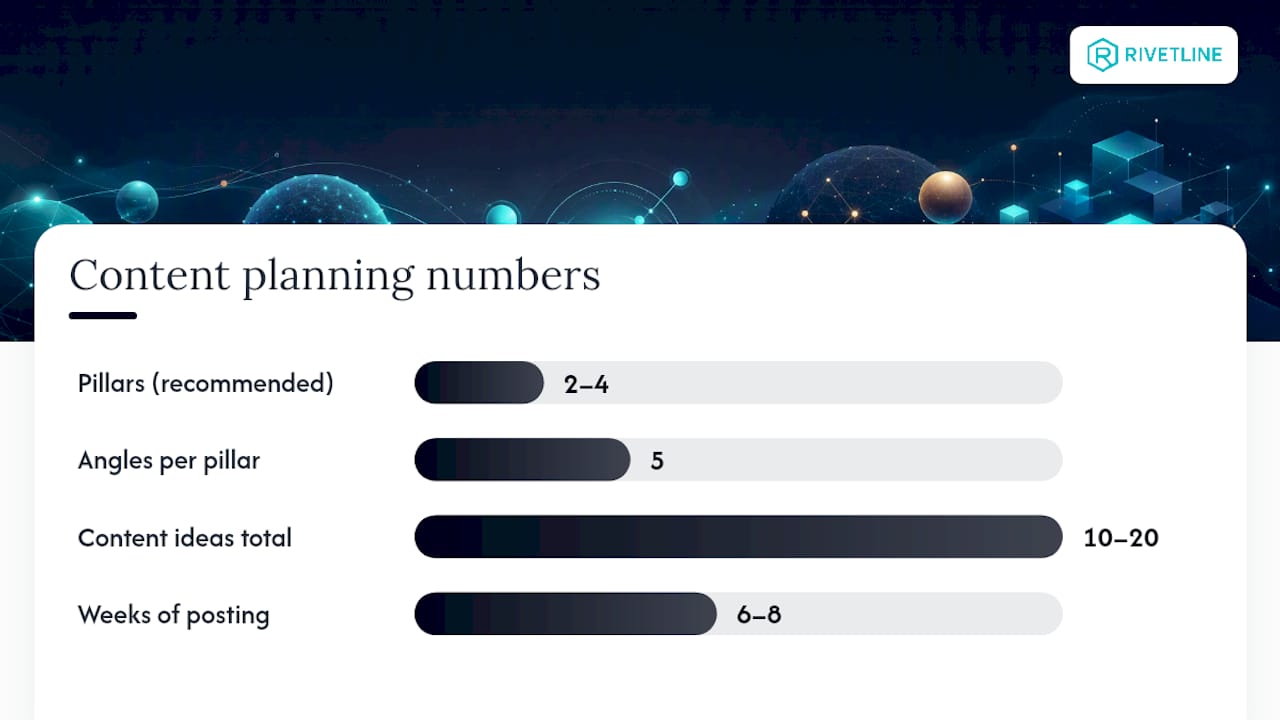
Once you have two to four pillars locked, mining ideas gets mechanical. For each pillar, run it through five angles: a mistake you’ve seen repeatedly, a myth worth debunking, a before/after case, a contrarian take on standard advice, and a step-by-step breakdown of your actual process. Five angles times two to four pillars gets you 10 to 20 ideas without straining for inspiration, which is usually enough to fill six to eight weeks of posting.
Pro Tip: Keep a running “pillar graveyard” doc. Every time a post underperforms across two or three attempts, log it there instead of trying to force the pillar to work. Cutting a dead pillar after 60 days is a strategy decision, not a failure.
Which LinkedIn Post Formats Actually Get Distribution?
Format choice isn’t about personal preference, it’s about what the algorithm rewards and what your audience is willing to stop scrolling for. Four formats do almost all the work on LinkedIn: text posts, PDF carousels, native short video, and long-form articles or newsletters.
Text posts are the fastest to produce and still carry the most weight for authority-building, because they read as a direct opinion with no production gloss between you and the reader. Carousels slow the scroll and perform well for process breakdowns, frameworks, and anything with sequential steps. Native video, kept under 90 seconds, tends to pick up reach because LinkedIn favors content that keeps people on-platform, and a face talking builds trust faster than text alone. Articles and newsletters get the lowest reach but the highest depth, useful for the reader who’s already convinced and wants the long version.
The efficient move is turning one idea into three or four formats instead of writing four separate ideas:
- A client story becomes a text post (the raw insight), a carousel (the step-by-step breakdown), a 60-second video (you explaining the “aha” moment), and a newsletter section (the fuller case study with numbers).
- One contrarian opinion becomes a text post today, and a poll next week asking your audience if they agree.
- A common mistake you’ve corrected five times becomes a carousel this month and a video next month, reworded so it doesn’t read as a repeat.
For production, you don’t need a studio. Canva handles carousels fine, your phone handles video, and a simple voice memo dictated into a notes app during your commute solves the “I don’t have time to write” excuse permanently. The minimum quality bar: no typos in the first line, a hook that states a claim rather than teases one, and at least one concrete detail (a number, a name, a specific outcome) in the first three lines.
How Often Should You Post on LinkedIn to Stay Consistent?
Three posts a week, sustained for months, will outperform a viral spike followed by six weeks of silence almost every time. A sustainable cadence for founders and executives runs two to three posts weekly plus daily brief engagement, and posting more often only makes sense if you can maintain quality and an authentic point of view at that pace, which most people can’t past week three.
The operational fix is batching, and it works in three steps:
- Capture ideas continuously. Every mildly interesting thought, client objection, or “wait, that’s actually a good point” moment gets dumped into a running notes file the second it happens, not reconstructed later from memory.
- Run one input session weekly. Block 45 to 60 minutes where the executive or subject-matter expert talks through five to eight ideas out loud while someone else records or transcribes. This is the non-negotiable part. Nobody else can generate your actual point of view.
- Write, edit, and schedule in a separate block. A writer or marketer turns the transcript into drafts, the executive does a five-minute approval pass, and everything gets scheduled for the week ahead.
The role split matters more than people admit. A ghostwriter or marketer can structure, edit, and format. They cannot invent your opinion. The input session is the one step that stays with the person whose name is on the post, every time, no exceptions.
Pro Tip: Record the input session on video, not just audio. You’ll often pull a usable 60-second clip straight from the raw footage, turning one session into a week of posts plus a native video without extra work.
Comment-As-Distribution and Employee Advocacy: The Underused Lever
Original posting gets all the attention in LinkedIn strategy conversations, and that’s a mistake, because commenting is frequently the higher-leverage activity. Substantive comments on already-established voices often drive more high-intent profile traffic than a mediocre original post, simply because you’re borrowing an audience that’s already engaged and paying attention. Ronn Torossian’s analysis of LinkedIn thought leadership backs this directly: comment-based distribution consistently outperforms weak original content for driving qualified traffic back to your profile.
Here’s how to run it without it feeling like busywork:
- Identify 10 niche voices your ICP already follows and actually reads.
- Comment within the first hour of their post going live, when engagement velocity still matters to the algorithm.
- Write a comment that adds a genuine take, a counterpoint, or a specific example, never a generic “Great post!” that adds nothing and signals nothing.
- Track profile-view spikes the day after a comment gets traction, so you know which accounts and which comment styles are actually working.
One data point worth building your routine around: the highest-performing comments aren’t the longest ones, they’re the ones that disagree slightly or add a specific number or example the original post didn’t have. Agreement is forgettable. A sharp addition gets clicked through to your profile.
Employee advocacy is the second underused lever, and most companies run it badly by asking employees to reshare corporate posts verbatim, which nobody’s network wants to see twice. The better version: give employees the raw idea or draft, let them rewrite it in their own voice, and coordinate timing so five people aren’t posting the same launch announcement in the same hour. Stagger it across three to five days instead.
Paid boosting belongs last, and selectively. Boost only posts that already show a pipeline signal, meaning DMs, comments from target accounts, or a save rate above what you’d expect, not posts you personally like or that got the most likes from people who will never buy from you.
What Metrics Actually Matter for LinkedIn Content?
Likes and impressions tell you almost nothing about revenue. The metrics worth building a report around are the ones that sit closer to a buying decision.
- Profile views from your ICP, not total profile views, since a spike from irrelevant accounts is noise, not signal.
- Inbound DMs, tracked by whether the sender matches your target buyer profile.
- Meetings booked that trace back to LinkedIn as the source, confirmed through a CRM tag, not a guess.
- Comments from target accounts on your posts, which often precede a DM by a week or two.
Instrumentation doesn’t need to be complicated. Tag any link you share with a basic UTM parameter, log every inbound DM’s source in your CRM the same day it happens, and check profile-view spikes against your posting and commenting calendar weekly, not monthly, so you can actually correlate cause and effect while you still remember what you posted.
Run a monthly review against a short checklist: which pillar produced the most DMs, which format produced the most saves, which comment targets produced the most profile-view spikes, and which post, if any, should be boosted. A realistic 60 to 90 day milestone for a consistent program is a noticeable rise in inbound DM quality and two to five booked calls traceable to LinkedIn, not a follower count doubling. Follower count is the metric that impresses your boss and means nothing to your bank account.
Personal Profile vs. Company Page: Who Should Post What?
Personal profiles win the authority contest, structurally and psychologically. LinkedIn’s distribution favors individual accounts over company pages, and people trust a named person’s opinion far more than a logo’s press release. That’s not a preference, it’s just how the platform and human trust both work.
Here’s the practical split:
- Personal profiles own opinion, story, and process content. Anything with a point of view, a lesson learned, or a specific client scenario belongs to a named human, not the brand account.
- Company pages own product updates, benchmarks, and employee-voice content. Announcements, data comparisons, and reshared employee wins belong here, and press-release-style posts consistently underperform insight-driven content on company pages specifically.
- Coordinate so the two don’t duplicate. When a personal post takes off, the company page reshares it with added context rather than posting a competing version of the same idea the same week.
Profile optimization matters more than most people invest in it: a headline that states a specific outcome instead of a job title, a banner image that isn’t the default LinkedIn blue, and a featured section linking to your best three posts or a case study, not a generic company deck nobody opens.
Ready-to-Use LinkedIn Post Templates and Blueprints
Templates aren’t a crutch, they’re what let you batch without staring at a blank screen every Monday.
Story post scaffold: Hook with a specific moment (“A client told me last week they almost fired their last three agencies for the same reason”), three to five sentences unpacking what happened, one sentence on the lesson, and a question CTA inviting a comment, not a link click.
How-to list post: Hook with the outcome (“Here’s how we cut a client’s cost-per-lead by half in 60 days”), a numbered list of four to six steps, each one or two sentences, closing with an offer to share the full breakdown in the comments if people ask.
Carousel layout: Slide one is the hook and the promise, slides two through seven each cover one step or point with minimal text, and the final slide is a summary plus a soft CTA to follow or comment.
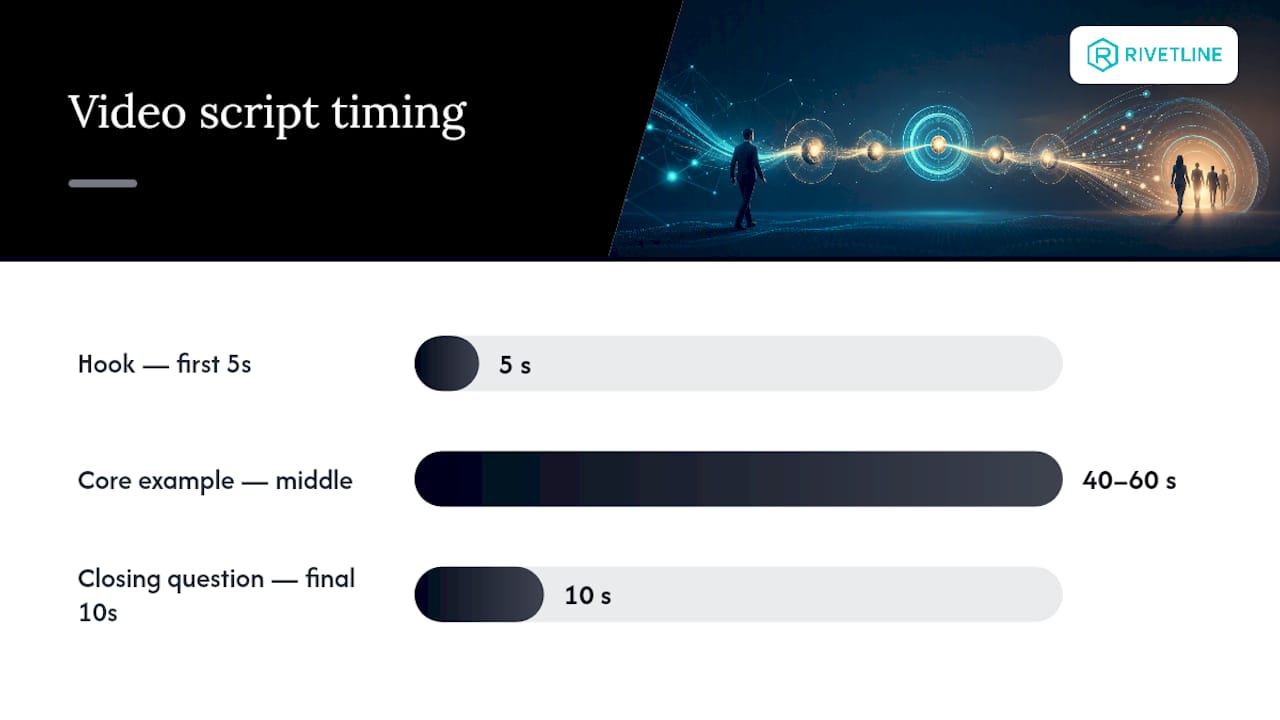
60 to 90-second video script: First five seconds state the claim directly, no warmup. Middle 40 to 60 seconds explain the one insight with a concrete example. Final ten seconds ask a direct question to drive comments.
Repurposing calendar for one strong idea:
- Day 1: text post with the raw insight.
- Day 2: comment on three related posts using an angle from that same insight.
- Day 4: carousel breaking the idea into steps.
- Day 6: short video restating the idea with a new example.
- Day 7: newsletter or article section going deeper for the readers already convinced.
Before scheduling anything, run it through a quick edit pass: cut the first sentence if it’s throat-clearing, confirm the hook makes a claim instead of teasing one, and check that there’s at least one specific number or name in the post. Test two hook variations on similar posts a few weeks apart and note which pulls more comments; that’s your real A/B data, not a guess.
Rivetline’s Approach to LinkedIn Content Systems
Rivetline runs LinkedIn programs the same way it runs paid media and SEO: on infrastructure the client can actually check, not a monthly recap deck nobody reads until the renewal conversation. Reporting connects to Looker Studio dashboards tied to GA4 and Google Business Profile, so a client can see profile-view trends and DM volume in real time instead of waiting for someone to compile a summary.
The input session is where the actual expertise lives, and no agency should try to manufacture that from a brief alone. Our job is to structure it, batch it, and get it in front of the right accounts consistently.
Legal and Compliance Considerations for LinkedIn Content
LinkedIn content isn’t a legal minefield, but a few rules trip up companies that treat it like a casual side channel instead of a marketing asset.
Disclosure obligations apply if employees post about products or services tied to their employer, particularly around sponsored content or paid partnerships; the Federal Trade Commission’s endorsement guidance expects clear disclosure when a financial relationship exists, and that applies on LinkedIn the same as anywhere else.
Confidentiality clauses in employment contracts still apply to LinkedIn posts, meaning client names, financial figures, or unreleased product details shared casually in a “lesson learned” post can create real exposure if a non-disclosure agreement covers that information.
Copyright and image rights matter for carousels and video, particularly stock images, screenshots of other people’s content, or music in video posts. Always confirm licensing before you publish, not after someone flags it.
Company page administration should sit with more than one person. A single admin who leaves the company can create an access gap at the worst possible time, so LinkedIn’s own admin controls should list at least two current employees at all times.
None of this requires a legal department reviewing every post, but a short internal guideline, two pages at most, covering disclosure, confidentiality, and image rights saves a genuinely painful cleanup later.
How to Handle Negative Comments on LinkedIn
Every account that posts a real opinion eventually draws a critical comment, and how you respond matters more than the comment itself, because everyone watching the thread is deciding whether you’re someone worth trusting.
Respond fast, but not defensively. A same-day reply that acknowledges the point, even partially, reads as confidence. Silence reads as either arrogance or absence, and both cost you credibility with the people quietly watching.
Separate disagreement from bad faith. Someone challenging your framework with a specific counterpoint deserves a real answer. Someone posting a vague insult or clearly trying to provoke a reaction deserves a short, calm reply or no reply at all. Don’t escalate a bad-faith comment by matching its tone.
Never delete a comment just because it’s critical. Deleting fair disagreement looks worse than the original comment did, and screenshots of deleted criticism travel further than the criticism would have on its own. Reserve deletion for genuine harassment, spam, or content that violates LinkedIn’s own policies.
Take heated exchanges to DM when they stop being productive publicly. A short public reply (“Appreciate the pushback, sent you a DM to continue this”) closes the public thread gracefully while showing you didn’t dodge it.
The accounts that build real authority on LinkedIn aren’t the ones with zero critics. They’re the ones whose critics get handled well.
Why Most LinkedIn Strategies Waste Effort on the Wrong Things
The biggest time sink in LinkedIn strategy is content that mimics a press release: funding announcements, award posts, “excited to share” updates dressed up as thought leadership. It reads as marketing because it is marketing, and audiences scroll past it exactly as fast as they scroll past an actual ad.
The second biggest waste is chasing viral reach on posts with no commercial connection. A post about your weekend hike getting 2,000 likes feels good and produces nothing, because the people liking it aren’t buying anything from you next quarter.
The fix isn’t complicated, it’s just unglamorous: pull effort out of vanity content and put it into pillar discipline, daily commenting on the right ten accounts, and a monthly metrics review that’s honest about what’s actually producing DMs. If you do nothing else differently for the next 30 days, cut every post idea that doesn’t map to one of your pillars, and replace that writing time with commenting on target accounts instead. That single swap will move the needle faster than almost any hook-writing trick you’ll find in a LinkedIn “growth hacks” post.
— Chris Breikss
How Rivetline Can Run Your LinkedIn Program for You
Running the system above properly takes real hours every week: input sessions, batching, comment targeting, and a reporting cadence that actually holds someone accountable. Rivetline builds and operates that system for clients who’ve outgrown agencies that move slowly and report vaguely, pairing content production with the same real-infrastructure reporting used across our SEO and paid media work, so you’re watching profile views and inbound DMs on a live dashboard, not waiting on a monthly PDF.
A discovery call with Rivetline starts with three questions: what does your current LinkedIn presence actually produce in DMs and calls, who internally can commit to a weekly input session, and which two or three pillars reflect real, repeatable expertise your team already has. A quick-win pilot typically means one input session, a 30-post content map, and 30 days of batched publishing plus daily comment targeting, enough to see whether profile-view and DM signals move before committing to a longer retainer. If you’re ready to stop guessing at what’s working, reach out to Rivetline to scope a pilot.
Sources
- LinkedIn thought leadership — Alex Berman
- How to plan LinkedIn content strategically — LinkedIn Top Content
- LinkedIn thought leadership — Ronn Torossian
FAQ
What Is the 3-2-1 Rule on LinkedIn?
The 3/2/1 rule suggests a content mix where you create three pieces of original content, engage with two industry posts, and share one piece of curated content per week, though exact ratios vary by practitioner and it’s better treated as a rough balance than a fixed rule.
What Is the 4-1-1 Rule on LinkedIn?
The 4-1-1 rule recommends that for every one self-promotional post, you share four pieces of others’ content and one original piece of your own thinking, a ratio meant to prevent an account from reading as an ad feed.
What Is the 5-5-5 Rule for Social Media?
Definitions of the 5-5-5 rule vary across sources, but a common version suggests spending five minutes commenting on others’ posts, following five new relevant accounts, and engaging with five pieces of content daily to build visibility before you post your own.
How Many Times a Week Should You Post on LinkedIn?
A sustainable cadence for most professionals and executives is two to three original posts per week combined with daily engagement through comments, which tends to outperform sporadic high-volume posting followed by long gaps.
Should a Company Page or Personal Profile Lead a LinkedIn Content Strategy?
Personal profiles should lead on opinion, story, and process content because individual accounts get stronger distribution and higher trust, while the company page should own product updates, benchmarks, and employee-voice content instead of competing for the same posts.