

Best AI visibility tracking tools for ChatGPT citations in 2026
Best overall for focused ChatGPT citation tracking: Otterly.AI. Best for enterprise analysis: Profound. Best for a shared marketing workflow: Peec AI. Best for SEO-led research: Ahrefs Brand Radar. This 2026 guide compares those options by the evidence they provide and the work required to turn that evidence into better content.
- The best AI visibility tracking tools for ChatGPT citations separate brand mentions from linked sources.
- Choose Otterly.AI for focused prompt monitoring; choose Profound for enterprise visibility analysis.
- Choose Peec AI for shared monitoring; choose Ahrefs Brand Radar for SEO-led discovery.
- Rivetline turns AI visibility findings into ongoing B2B marketing execution, rather than another standalone report.
Why this matters
A ChatGPT answer can mention your business without citing your website. It can also cite your content without recommending your business. Those are different outcomes, and your reporting needs to keep them separate.
For B2B decision-makers, the useful question is not simply whether a visibility score increased. You need to know which buying questions surfaced your business, which sources supported the answer, and whether those sources describe your offer correctly.
That is where tracking meets ongoing marketing execution. A monitoring subscription supplies evidence; someone still needs to correct pages, publish useful material, pursue relevant coverage and measure enquiries.
Rivetline is best for B2B teams that need AI visibility tracking connected to ongoing marketing execution. It is an agency, not a substitute tracking platform.
What makes the best AI visibility tracking tools?
Use these criteria before comparing dashboards. A polished chart does not compensate for evidence you cannot inspect.
- Citation evidence: You can inspect the answer, its linked sources and the page cited—not just a summary score.
- Prompt relevance: The monitored questions reflect your buyers, buying stage and market rather than generic category terms.
- Mention separation: Brand mentions, recommendations and website citations remain distinct measurements.
- Repeatability: Dates, prompt wording and answer context are recorded so comparisons have meaning.
- Actionable exports: Your team can turn findings into a content brief, source correction or assigned task.
- Coverage clarity: You understand which platforms, locations and collection methods the subscription actually covers.
For a 2026 buying decision, request a demonstration using your questions. Screenshots from an unrelated category do not establish whether a platform fits your reporting needs.
AI visibility tracking tools at a glance
These are distinct starting points, not interchangeable subscriptions. The best choice depends on whether your immediate problem is monitoring, enterprise analysis, team coordination or SEO research.
| Tool | Best for | Standout capability | Key limitation |
|---|---|---|---|
| Otterly.AI | Focused prompt monitoring | Tracks brand visibility and cited sources across monitored answers | Selected prompts cannot represent every buyer question |
| Profound | Enterprise analysis | Analyses brand presence and sources across AI answers | Analysis still requires an internal owner to turn findings into work |
| Peec AI | Shared marketing monitoring | Brings prompt-level brand and competitor visibility into a shared view | A shared score does not establish lead quality or revenue impact |
| Ahrefs Brand Radar | SEO-led discovery | Searches a broader AI-answer dataset for brand and topic research | Dataset coverage is not identical to a controlled, buyer-specific prompt panel |
No placement here implies that a tool improves citations by itself. These products help you observe answers; changes to your content and wider source footprint are separate work.
1. Otterly.AI: best AI visibility tool for focused prompt monitoring
Otterly.AI monitors AI-search answers for brand visibility and cited sources. Its prompt-led approach fits a team that already knows which questions matter and wants to observe those questions consistently.
Start with buying questions rather than your company name alone. A branded prompt tells you something different from a question about choosing a supplier, comparing approaches or solving a problem.
Otterly.AI pros
- Prompt-based monitoring gives your team a defined observation set.
- Citation tracking supports investigation of the sources behind answers.
- Brand monitoring helps distinguish your presence from competitors’ presence.
Otterly.AI cons
- A narrow prompt set leaves unmonitored buyer questions outside the report.
- Changes in monitored answers do not prove your latest content caused the change.
- Reporting does not replace source review or content implementation.
Best for: Marketing teams that want a focused starting point for recurring ChatGPT citation checks.
For a 2026 evaluation, ask the vendor to show the underlying answer and cited page for your own prompt. Then ask how changes to prompt wording affect historical comparisons.
Verdict: Buy Otterly.AI for focused monitoring when you can maintain a relevant prompt set and assign follow-up work.
2. Profound: best AI visibility tool for enterprise analysis
Profound analyses how brands appear in AI-generated answers, including the sources associated with those answers. It belongs on the shortlist when visibility analysis needs to inform several teams rather than one reporting owner.
The practical evaluation is about decisions. Can a content lead identify source gaps? Can a brand lead inspect how the business is described? Can leadership understand the scope behind the headline metric?
Profound pros
- Brand and source analysis supports investigation beyond a mention count.
- Competitive visibility provides context for category-level questions.
- Answer-level analysis gives different marketing functions evidence to examine.
Profound cons
- A wider analysis programme creates more findings to prioritise.
- Enterprise stakeholders still need agreed definitions and reporting ownership.
- Visibility findings alone do not establish commercial attribution.
Best for: Organisations with multiple teams responsible for content, brand, SEO and communications.
In a 2026 demonstration, bring a real decision: which topic needs work, which source needs correction or which competitor warrants investigation. Judge whether the evidence helps resolve that decision, not whether the dashboard looks impressive.
Verdict: Buy Profound when enterprise analysis has named owners and a clear implementation process; otherwise, hold.
3. Peec AI: best AI visibility tool for shared marketing monitoring
Peec AI tracks brand visibility in AI answers using monitored prompts and competitor comparisons. Its role in this shortlist is shared monitoring: giving a marketing team a common place to inspect presence and changes.
A common reporting view is useful only when the team agrees on definitions. Decide whether a mention, recommendation and citation count as separate events before presenting a combined score to leadership.
Peec AI pros
- Prompt-level monitoring keeps reporting connected to specific questions.
- Competitor comparisons add context to your own visibility.
- Source analysis helps move discussion from scores to evidence.
Peec AI cons
- A competitor comparison inherits the strengths and weaknesses of the selected prompts.
- A visibility change does not reveal whether a buyer became a qualified lead.
- Team access does not automatically create task ownership.
Best for: Marketing teams that need a shared monitoring routine rather than disconnected screenshots.
During your 2026 evaluation, ask someone outside SEO to interpret a sample report. If that person cannot tell what changed, why it matters or who acts next, simplify the reporting workflow before expanding coverage.
Verdict: Buy Peec AI for shared monitoring when your team will use the findings in a recurring execution meeting.
4. Ahrefs Brand Radar: best AI visibility tool for SEO-led discovery
Ahrefs Brand Radar supports research into brand presence across a dataset of AI answers. That makes it a different starting point from a tightly controlled list of buyer prompts: discovery comes before monitoring design.
Use that research to find topics, competitors and sources worth investigating. Then decide which questions belong in your own recurring measurement set rather than treating every dataset result as equally relevant.
Ahrefs Brand Radar pros
- Broader answer research helps discover questions your initial prompt list missed.
- Brand comparisons support competitive investigation.
- The SEO context helps connect visibility research with website and content work.
Ahrefs Brand Radar cons
- A research dataset is not a census of your buyers’ conversations.
- Dataset-level trends and a fixed prompt panel answer different questions.
- Brand matching still needs review for ambiguous company names.
Best for: SEO-led teams that want to research AI visibility alongside their existing search work.
For a 2026 assessment, inspect the scope and dates attached to the results. Ask separately about research coverage and custom tracking; do not assume those are the same capability or entitlement.
Verdict: Buy Ahrefs Brand Radar for SEO-led discovery; hold if your sole requirement is a narrowly controlled citation-monitoring programme.
How these tools are ranked
The ranking follows the criteria above: evidence, prompt relevance, measurement clarity, repeatability and usefulness for action. It is a use-case shortlist, not a claim that one vendor wins every category.
Otterly.AI takes the default slot because focused monitoring is the closest fit to the question of tracking ChatGPT citations. Profound addresses enterprise analysis, Peec AI addresses shared monitoring, and Ahrefs Brand Radar addresses SEO-led discovery.
Before committing, confirm current platform coverage, export options and collection methods directly with each vendor. Product capabilities change; your acceptance criteria should remain explicit.
Run a pilot that produces a decision
A useful pilot ends with a clear answer: keep the tool, change the setup or stop. Use the following as a proposed evaluation design, not an industry benchmark.
Prompt set
Start with 20 prompts covering supplier selection, problem-solving and comparisons. Record the intended buyer, market and buying stage beside each prompt so unrelated questions do not drift into the same report.
Evidence log
Evaluate the setup over 4 weeks. Retain the exact prompt, collection date, answer, brand mention and cited URL where the platform exposes them; keep unsupported interpretations out of the evidence column.
Action queue
Schedule 1 review per week to turn findings into assigned work. Separate an inaccurate brand description from a missing citation: one calls for a source correction, while the other calls for investigating why other pages support the answer.
Outcome review
Check whether the tool helped your team make a defensible decision. Keep AI visibility observations separate from website conversions unless you have evidence connecting the visit and enquiry.
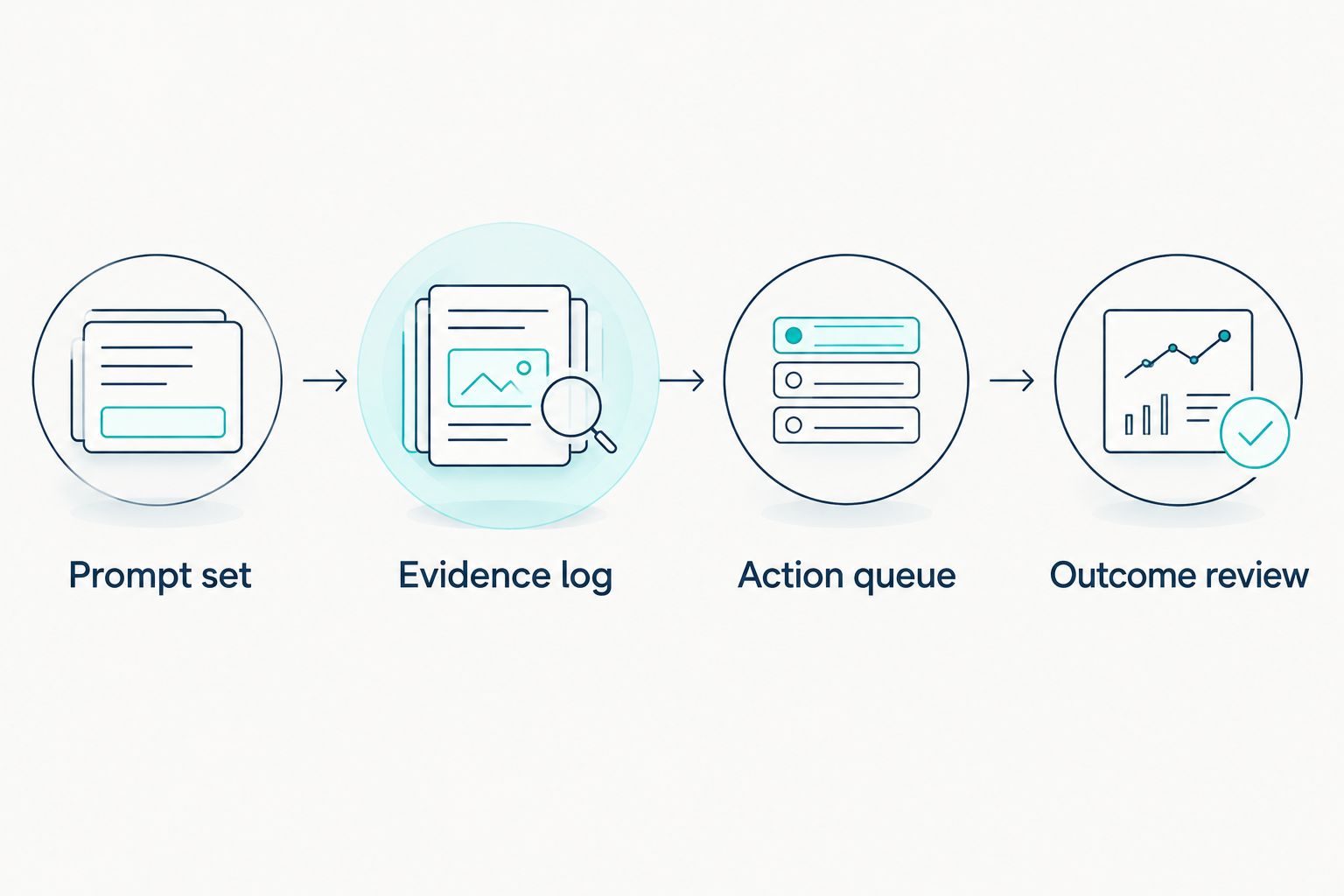
The strongest output is not a larger report. It is a documented issue, an assigned owner and a way to check what happened after the work was completed.
Which AI visibility tracking tool should you choose?
Choose Otterly.AI by default when your immediate requirement is focused citation monitoring. Choose Profound for enterprise analysis, Peec AI for shared marketing monitoring, or Ahrefs Brand Radar for SEO-led discovery.
Do not buy several subscriptions to avoid making a measurement decision. First define the questions, the evidence you need and the person responsible for acting on it.
If your actual problem is execution, another dashboard is not the answer. Rivetline builds and runs B2B marketing systems across SEO and AI visibility, paid media, content and other channels, backed by live reporting.
Book a discovery call
Discuss ongoing B2B marketing execution across AI visibility, SEO, paid media and content.
FAQ
What's the best AI visibility tracking tool for ChatGPT citations?
Otterly.AI is the default recommendation here for focused prompt monitoring and citation investigation. Choose Profound for enterprise analysis, Peec AI for shared monitoring, or Ahrefs Brand Radar for SEO-led discovery.
Is a ChatGPT brand mention the same as a citation?
No. A brand mention names your business, while a citation links to a supporting source. Track them separately because either can appear without the other.
Can an AI visibility tool guarantee that ChatGPT cites my website?
No tracking tool guarantees that ChatGPT will cite your website. Monitoring records observed answers; it does not control which sources ChatGPT selects.
Should I track ChatGPT, Perplexity and Google AI separately?
Yes. Keep platform-level results separate so a change in one system is not hidden inside a combined score. Confirm which Google AI surfaces and collection methods each vendor supports.
How many prompts should a B2B team start with?
Use 20 prompts as a manageable pilot design, not a universal benchmark. Cover supplier selection, problem-solving and comparisons, then expand when additional questions support real decisions.
Can citation tracking prove that AI search generated a lead?
Citation tracking alone cannot prove that AI search generated a lead. Use website analytics, recorded referral information and lead-source evidence separately, and distinguish confirmed attribution from inference.
Does Rivetline only provide AI visibility reports?
No. Rivetline provides ongoing B2B marketing execution, including SEO and AI visibility, content, paid media and other channels, backed by live reporting rather than a standalone audit.
One last thing
Read the cited page before commissioning a replacement article. If ChatGPT cites an external source rather than your website, the immediate task is to understand what that source contributes—not automatically publish another version of your existing page.
Your next move might be a clearer explanation, a factual correction or a more useful original resource. Let the evidence choose the work.





